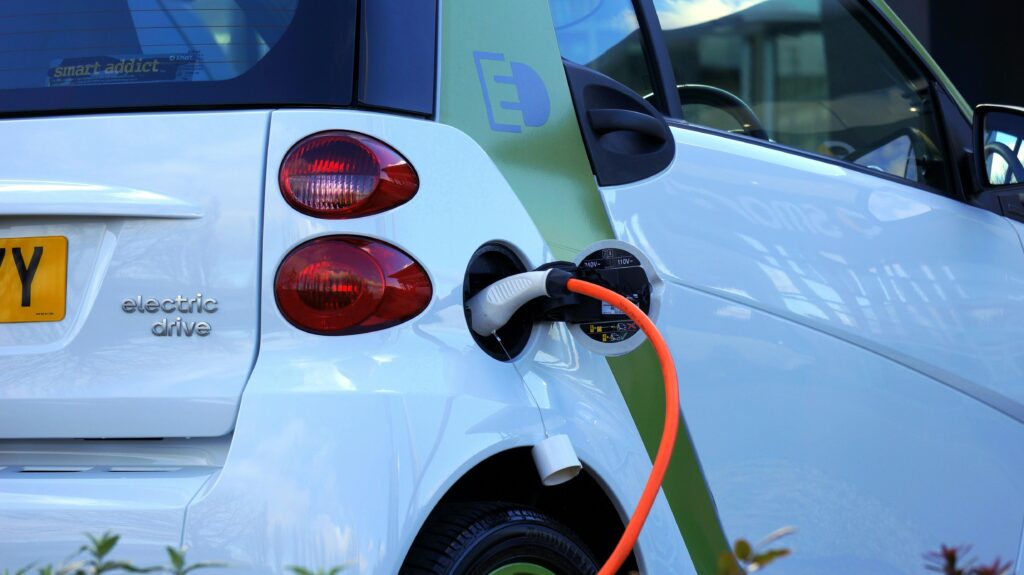
The transition to green mobility is no longer just an environmental choice; it is a strategic financial decision. If you are managing a business, building an electric company vehicle fleet in France is now heavily supported by favorable legislation. With the latest 2025 updates to French tax laws and employee benefits, optimizing your corporate mobility strategy can lead to massive cost reductions. From corporate tax exemptions to lucrative EV government grants, let’s explore the key financial incentives driving this electric revolution.
1. Benefit in Kind: The Growing Gap Between ICE and Electric Vehicles
There are real incentives in France to change over to electric vehicles, including in the regulations applicable to vehicles provided to employees.
While since 1 February 2025, the cost of providing an ICE vehicle as a benefit in kind has increased considerably, the measures in favour of electric vehicles continue to apply.
For 100% electric vehicles made available between 1 February 2025 and 31 December 2027 which meet a minimum level of eco-score, the valuation of the benefit in kind excludes the cost of electricity covered by the employer and, in addition, benefits from an allowance on the contributions calculation base.
Example: Calculation of the Benefit in Kind on a Fixed Rate Basis
E.g. a vehicle purchased new for €50,000, calculation of the benefit in kind on a fixed rate basis:
- Electric vehicle with the required eco-score: The benefit in kind on which the social contributions are calculated will be €243 per month (average employer’s contributions: approximately €110/month)
- ICE vehicle: the benefit in kind on which the social contributions are calculated is €833.33 per month (average employer’s contributions: approximately €375/month)
2. Corporate Tax Exemptions and Advantages for Your Fleet
From the tax point of view, the provision of a fleet of electric vehicles provides several advantages to the company:
- Exemption from the tax on the use of passenger vehicles for economic purposes (taxe sur l’affectation des véhicules à des fins économiques) (formerly the company vehicle tax (TVS)):
As a reminder: the calculation of the tax is based on two components: carbon dioxide emissions and emissions of atmospheric pollutants.
For example, a company using for economic purposes a passenger vehicle emitting 145 g/km of CO² will be liable for €1,183 in tax plus a further tax of between €100 and €500 inclusive depending on the pollutant emission category.
Furthermore, since 1 March 2025, a third component has been added to the tax, which concerns companies with a fleet or more than 100 light vehicles. This tax applies to companies that do not meet the low-emission vehicle quota set by the State when they replace their vehicle fleet.
Enhanced Tax Deductibility Limits
- Enhanced tax deductibility:
Depreciation of passenger vehicles is only partially deductible from the company’s taxable income. The deduction limit depends on the level of CO² emissions and varies from €9,900 to €30,000. Thus, depreciation of an electric vehicle will be deductible up to €30,000.
Availability of Government Grants
- Availability of government grants:
In addition to the above-mentioned tax breaks, companies with so-called clean vehicles may also be eligible for State or regional grants.
Aside from the environmental aspect, you would be well advised to think carefully about how you intend to adapt your fleet of vehicle.
Future-Proofing Your Corporate Mobility
Transitioning to an electric company vehicle fleet in France goes far beyond reducing your carbon footprint. It is a powerful lever to optimize corporate taxes, drastically lower your employer’s social contributions, and unlock valuable financial aids. With the 2025 regulatory shifts intentionally penalizing traditional combustion engines, the ROI of electric mobility has never been clearer. get in touch with our team
Cofimé International, affiliated with the Cofimé Group